
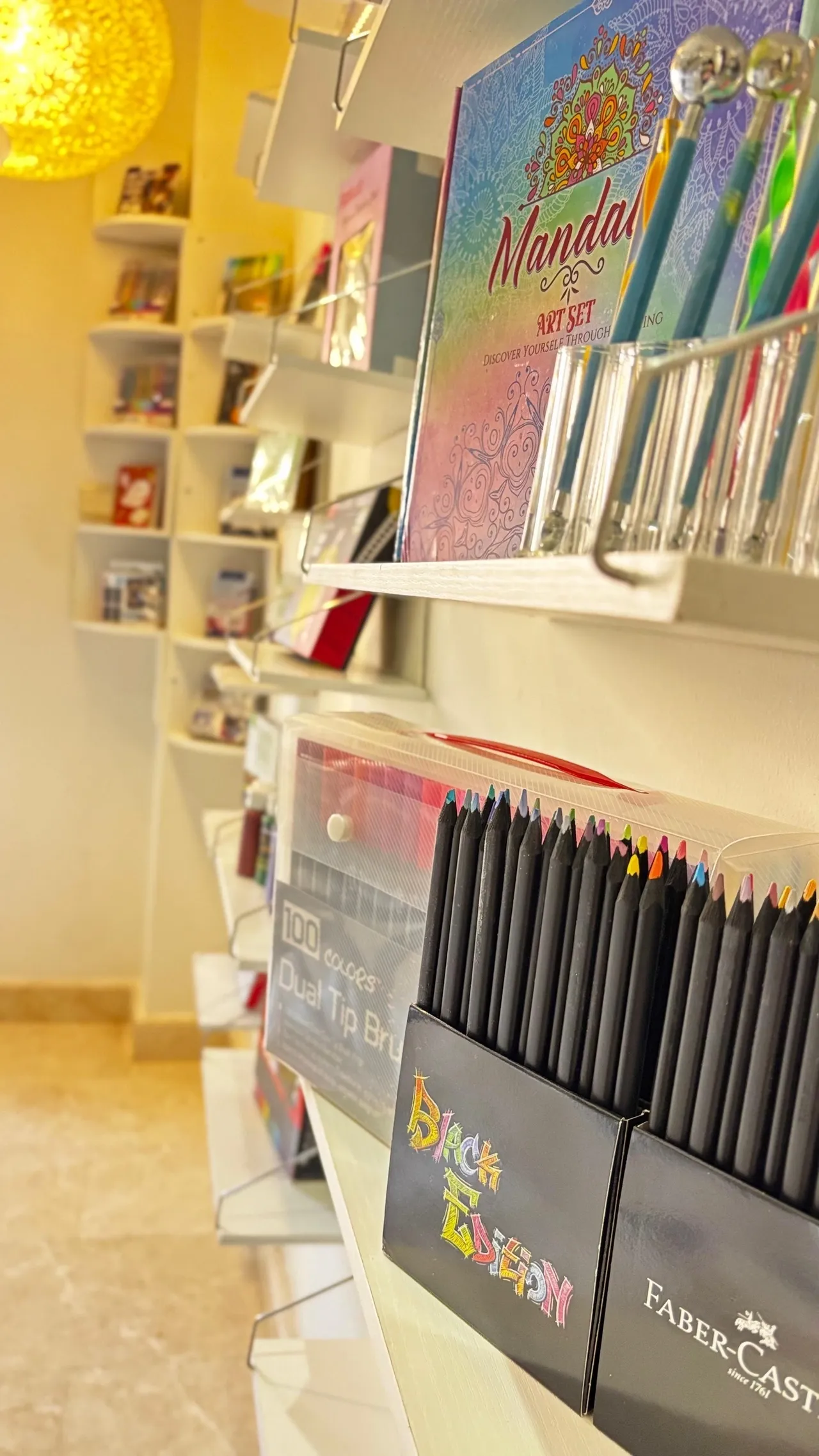
 my art-shelf
Positive Embodyography – Bodily Intellect (MISSC: Interaction)
I don’t have a bookshelf. I have an artshelf.
And lately, this small detail has revealed something much bigger about how I am living my PhD and documenting it through Embodyography.
In a world where AI delivers information instantly, I am becoming increasingly aware of something deeply human: there is an intellect in the body that no machine can replicate. There is intelligence in my hands, in my senses, in the way my body interacts with materials, textures, colours, sounds, and movement. There is bodily intellect—and it is shaping how I understand my research and how I move through this academic journey.
My art is not merely decoration. It is a method. It is a memory. It is evidence.
It is where my embodied intellect shows itself.
Artistic knowledge can absolutely come from books. I can learn colour theory, perspective, technique. But the practice of art—
the pressure of a stroke,
the steadiness of the wrist,
the way the light needs to fall—this knowledge begins in the body.
It moves from the hand to the brain, not the other way around.
My hand softens a line before my brain articulates why.
My body remembers rhythms my mind never consciously learned.
The intellect is in the fingertips first; the brain simply archives it.
This is true far beyond art.
Dancers, musicians, athletes—their knowledge is stored in their bodies. Their mastery becomes so embodied that the movement appears unconscious, automatic, intuitive. Their bodies know before their minds check in.
And yet, in most academic disciplines—especially in management education—this bodily intellect is ignored, minimized, or treated as secondary. Brain intellect is praised, measured, encouraged, demanded.
Bodily intellect is rarely acknowledged, even though it exists powerfully in so many professions and forms of human excellence. My PhD is not an attempt to replace the mind.
Even artists and athletes depend on their brains in deep and complex ways.
Rather, my work aims to activate bodily intellect visibly within a field that rarely celebrates it. To show that bodily knowing can complement, enhance, and deepen the traditional mental and analytical ways of learning.
And this brings me to today’s focus: Interaction—the second driver of the MISSC framework. (Fatani, 2025)
Interaction is not only between people. It is the continuous exchange between:
• my body and my art
• my hands and different mediums
• my senses and the environment
• my energy and the energy of those around me
• my embodied state and the intellectual demands of the PhD.
When I interact with art, something profound happens. My body begins to organize my mind.
The discipline of each stroke, the repetition, the precision—all of it reflects back into my thinking.
The organization within the artwork organizes my thoughts.
The structured expression structures the chaos inside me.
Through interaction, my hand settles my mind, my senses settle my emotions, my body generates clarity my mind could not reach alone.
This is positive bodily intellect—an embodied knowing that stabilizes and uplifts me through a journey filled with deadlines, ethics forms, readings, and expectations.
But alongside the academic demands is another reality:
interaction with people, presence, community, encouragement.
The supportive energy of my supervisors, classmates, administrators—all part of the embodied side of this PhD that makes the experience human and grounded.
This is the side that management education rarely highlights, yet it is transformative.
And so having an artshelf instead of a bookshelf feels fitting.
My PhD is not only in texts; it is moving through my existence, my being, my body.
It is expressed through colours, shapes, rhythms, feelings, senses, and tactile choices.
It is the physical act of organizing my inner world through interaction.
This is Embodyography:
the research and the lived practice becoming one.
In the next chapter, I will move to the third MISSC driver—Space—and explore how the environments our bodies inhabit shape our ability to think, create, and learn.
For now, I close with one truth:
My body is thinking. And I am learning to listen.
Fatani, R.H., 2025. « Embodiment in Management Education » McGill University, May.
Reflections
0
